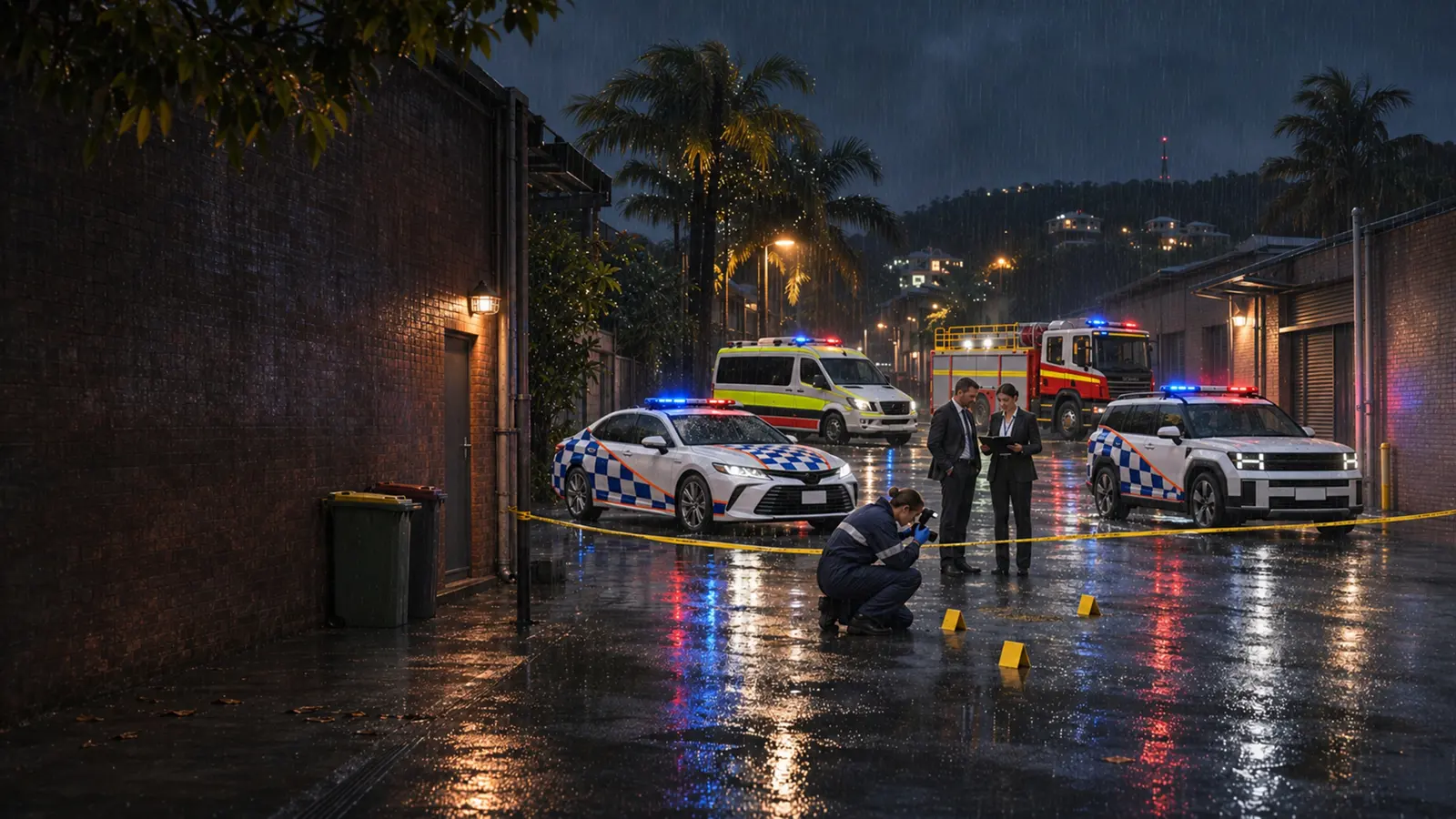
Evidence turns observations into a fair, reviewable case.
- Protect both inculpatory and exculpatory material; the purpose is to establish what occurred, not confirm a preferred suspect.
- Use only evidence that exists through supported roleplay and the authorised forensic system. Never invent a DNA, fingerprint, residue, ballistic or laboratory result.
- Record mistakes, contamination, duplicate collection and broken continuity honestly.
Control the scene before touching potential exhibits.
- Address threats and urgent medical care first, establish an entry point and keep unnecessary people outside the working area.
- Nominate a scene officer and, where practical, one collection officer. Record people who entered, moved an item or had an unavoidable reason to disturb the scene.
- Photograph or carefully describe each exhibit in place, including exact location, orientation, condition and nearby context.
Every exhibit must be identifiable from scene to final disposition.
- Use the correct issued collection equipment and interaction for the evidence type. Confirm the unique identifier returned by the system.
- Record incident number, collector, date and time, exact recovery location, description, condition, method and container.
- Package items separately where cross-contamination is possible. Make firearms safe in roleplay while preserving their original condition as far as practicable.
Treat each result according to what it actually proves.
- Biological material and fingerprints may associate a person with an item or location; context is still required to explain when and why it was deposited.
- Cartridge cases, projectiles and firearm records may connect events or an administrative owner; registration alone does not prove possession or discharge.
- Gunshot residue is time-sensitive supporting evidence and must not be treated as conclusive proof by itself.
- Vehicle fragments, tyre impressions and collision material support reconstruction only where the authorised examination returns a result.
Continuity is the documented history of possession and handling.
- Record every transfer, temporary examination, storage location and return. Do not leave exhibits in personal storage or pass them without updating the record.
- Submit only the examinations supported for that exhibit and wait for the system result. Do not narrate instant laboratory certainty.
- Cross-reference the exhibit identifier and result in the incident and relevant officer report; notify the case officer of material findings.
A complete case explains the evidence and its limitations.
- Link every alleged offence element to admissible facts, witnesses or exhibits. Avoid duplicative charging based on the same conduct.
- Describe conflicting, negative and exculpatory findings as clearly as evidence supporting the allegation.
- Retain original images and records; corrections must be made through an auditable amendment rather than deletion or silent rewriting.